Putin says ‘yes’ to Russia’s digital ruble
The CBDC pilot will be implemented on Aug. 1, 2023
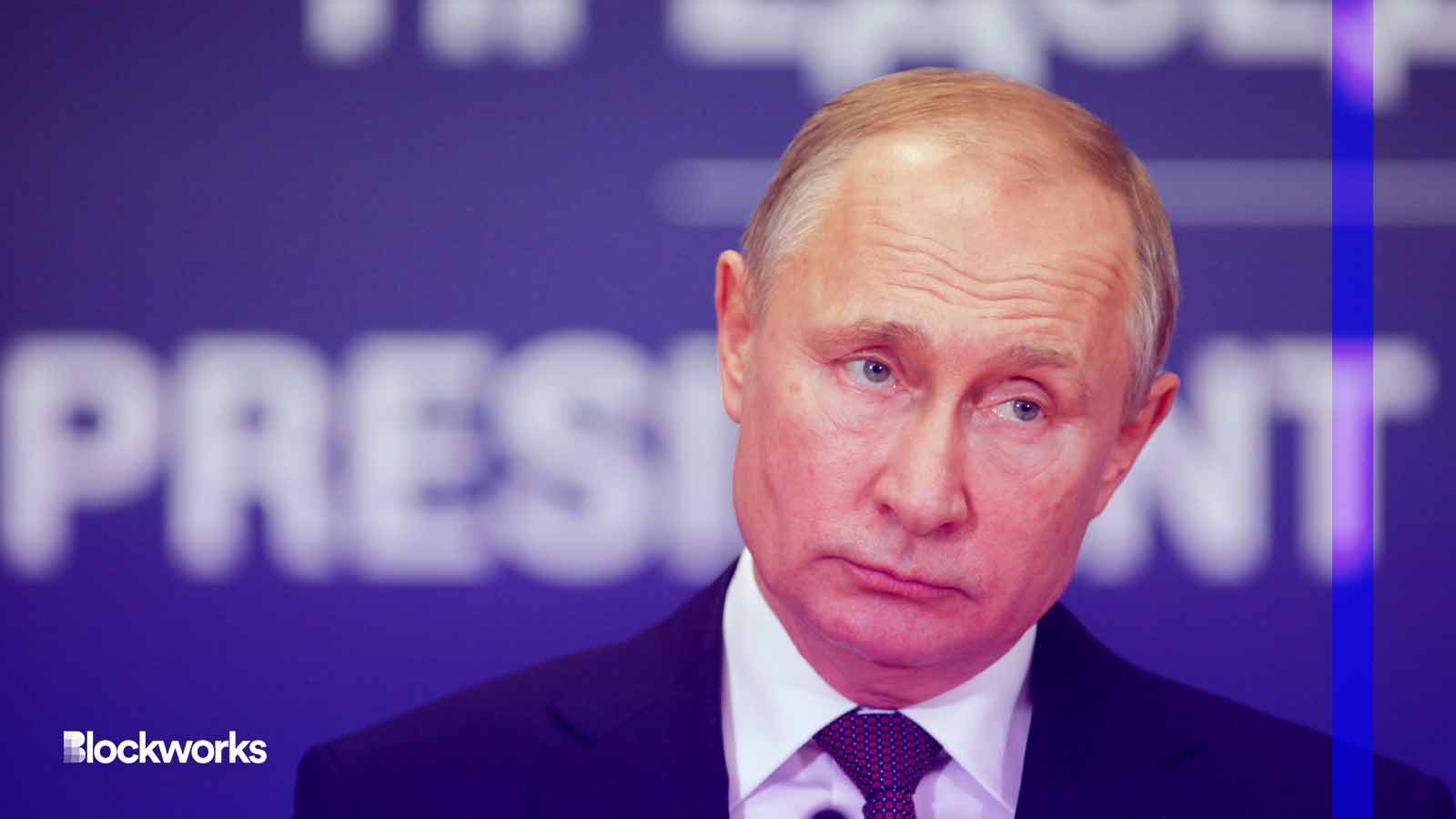
Russian President Vladimir Putin | Sasa Dzambic Photography/Shutterstock modified by Blockworks
Russian President Vladimir Putin has signed a bill that will introduce a digital version of the ruble, after the effort was initially sanctioned by the Duma on July 11, 2023.
Putin quite literally gave the law his stamp of approval on Monday, which now makes Russia the largest nation in the world to implement a central bank digital currency (CBDC).
The CBDC pilot will go into effect on Aug. 1, 2023, which comes a little under three years after the Russian government first published a consultation paper on the digital ruble in October 2020.
Elvira Nabiullina, the governor of Bank of Russia, said in a statement that citizens would not be forced to use the CBDC and that it will serve as an additional currency.
The Bank of Russia will operate and maintain the necessary infrastructure to get a CBDC up and running, according to the text of the law.
Russia is joining 21 other nations that have launched pilot programs for CBDCs, according to the Atlantic Council CBDC tracker. Once the digital ruble officially launches past the beta, Russia will join a collection of 11 other nations that have actually instituted a CBDC — including Nigeria and a smattering of countries in the Caribbean.
Russia’s move toward digital currencies comes at a moment when global government interest in CBDCs is at an all-time high. A 2022 Bank of International Settlements survey found that 93% of central banks have shown interest in exploring a CBDC.
Meanwhile in the US, England and Singapore, jobs having to do with CBDCs are exploding. Branches of the Federal Reserve in San Francisco, Boston, and Cleveland are all hiring CBDC architects, Blockworks reported Monday.
While the US hasn’t announced an official CBDC pilot, the Fed joined up with numerous central banks to pen a paper on the topic in May.
It remains to be seen how Russia’s CBDC will fare, but Nigeria — the next biggest nation to have launched one for its citizens — has run into major issues with its implementation.
Molly Jane Zuckerman contributed reporting.
Get the news in your inbox. Explore Blockworks newsletters:
- The Breakdown: Decoding crypto and the markets. Daily.
- 0xResearch: Alpha in your inbox. Think like an analyst.